At 17 I was already fixing computers in offices.
Most of the time I had no idea what the problem was.
So I did the only thing I could: list everything that could be failing… and rule things out one by one until I found the cause.
Without knowing it, I was already thinking like a PM.
From technician to “the one who makes things happen”
At 26 I joined telecom and understood what I was good at: coordinating, making decisions, moving teams forward.
Over the years I learned something no university teaches:
this is not about tracking tasks.
It is about being in the trenches. Understanding the technical side, but also the people. Unblocking things when no one else can.
There is no course that teaches you to stay calm when something is not going as planned in production, with real impact, and you have to decide in seconds: rollback? keep going? escalate?
No certification prepares you to manage stakeholder expectations in that moment: what you communicate, how you say it, who owns what.
That you learn by doing it.
Santiago, 6am
The real learning came in specific moments.
I remember a project at a medical center in Santiago.
We had to renew the entire infrastructure in one night. Everything planned, everything tested.
At 5am it was done. I went home feeling good.
But something did not sit right.
I opened my laptop to check… and could not connect.
At 6am I was back on site.
A misconfigured port.
I fixed it before they opened. No one noticed. Everything worked as if nothing had happened.
That day I understood something important:
the real work is not about planning perfectly, it is about responding when reality does not follow the plan.
Over time, those kinds of situations stopped being exceptions.
They became part of the job.
Today I have led hundreds of production changes across different countries, teams and contexts. Real implementations on live systems, with clients and operations running.
At first I was very nervous. There was not much help, and far fewer tools than today.
You had to figure it out anyway.
And over time I got good at it.
Today, when I have to execute a production change, I can read it quickly: understand the risk, the effort, and whether it is really ready to go.
The technical part is the easy part
But I also understood something else:
many times the hardest part is not the technical side.
I have seen deployments that were fully coordinated, planned, and aligned, and still had to be rescheduled because an approval from one team never arrived or because someone critical was not available in time to validate their part.
And when that happens, you have to organize everything again: re-coordinate, move the window, notify everyone, and start over.
I have also been part of complex migrations where everything worked fine in preproduction, but in production it simply did not behave the same way.
That is when you understand that it is not enough for something to work technically. You also have to manage timing, expectations, dependencies, and real pressure.
That is where the work really changes.
For me, the way forward is simple: common sense, being direct, listening, and leaving everything clear.
Actions, owners, pending decisions. And pushing until things move.
A way of thinking that got into everything
Without realizing it, that way of thinking started showing up in everything.
Not because I planned it. It just happened.
I do not run my life like a perfect project. I do not plan my weekends months in advance the way people do here in the Netherlands.
In fact, I am still very much “a la chilena” in many things.
But for what matters, I think this way every day:
what is the priority, what is blocking, what needs to be pushed now, and what is better to wait on.
And that is where everything started to connect.
And over time, that pattern started repeating itself outside the technical world.
Businesses that worked. Teams that performed well.
But where decisions were being made without having all the information clear.
And that is where I started seeing the same problem, but in a different context.
NeuraPRO: same principle, different field
Today, at 41, I am in a different phase.
Building something of my own.
Applying everything learned over years of projects, but now in something that depends entirely on me.
Because when something is yours, every decision carries more weight and every mistake feels closer.
And yet, the principle is the same.
That is why, when I am building something — like NeuraPRO — I do not start with the solution.
I start by understanding the real problem: the pain, the context, the environment.
Because in the end, the problem is not that tools are missing.
It is that most of the time nobody knows clearly what is actually happening in the business.
Before writing a single line of code, I spent months, maybe years, thinking about how to create something that could genuinely help other people.
I come from a city deeply connected to the countryside, always surrounded by growers, avocado fields, and that way of life.
For a long time the idea stayed in my head, until I started seeing the real pain more clearly: a concrete need and very little built with them truly in mind.
I do not know if it will work. Of course there are fears.
But fear has always been present in my professional life, and in the end, as we say in Chile, if you do not take the risk, you do not cross the river.
And that, for me, is the real difference.
Not starting in love with the solution, but as close as possible to the real problem.
After that, everything can change: the tool, the path, even the initial idea.
But if you misunderstand the problem, everything else is irrelevant.
And I will probably still make mistakes.
But now I try to make mistakes closer to the truth.
If there is one thing this whole journey has taught me, it is this:
real problems do not change that much across industries.
The context changes.
But the need for clarity… is always the same.
The question that keeps coming back
And sometimes I keep coming back to one question:
if much of what shaped me was doing the hard work myself… how does the next generation learn when that work will be done by AI?
I do not have an answer.
But I think something is lost if you never have to be there at 6am fixing something no one else noticed.
Because it is not the misconfigured port that shapes you.
It is what you decide to do when you realize the system is not responding.
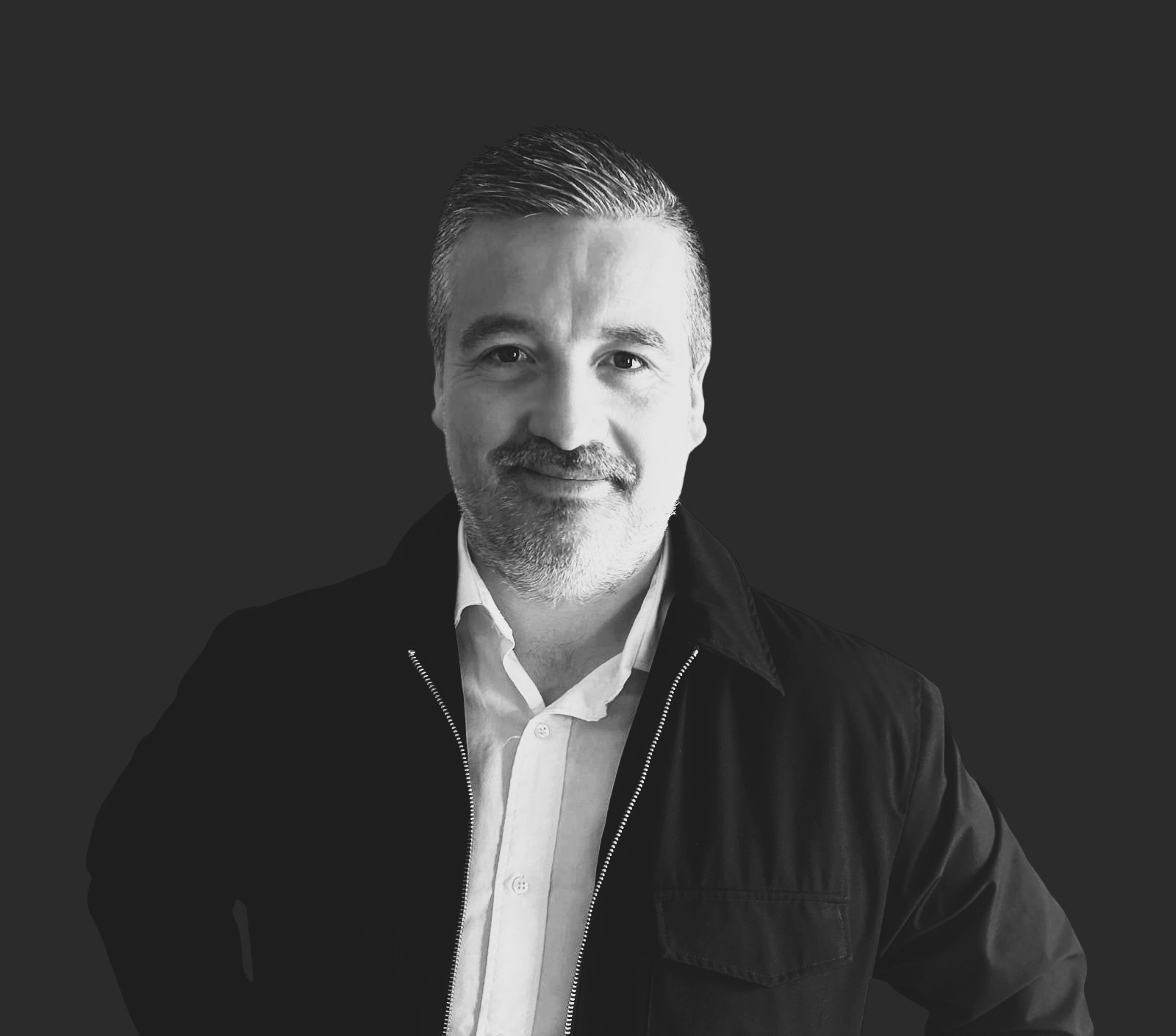
✍️ Claudio from ViaMind
“Dare to imagine, create and transform.”
What about you? When was the moment you truly understood how your work really works?
Because in the end, it is not about systems.
It is about what you do when the information is not enough.
FEATURED POSTS
ABOUT ME
ViaMind Ecosystem
- viamind.io · viamind.cl — The brand hub for ideas, technology and strategy.
- NeuraPRO — Practical software for managing real operations.
- ViaMind Radar — Less noise, more signal. AI-curated technology stories.